Chai at Home: A Simple Black Tea Guide for Spiced Milk Tea
Chai has a reputation for being complicated. Long spice lists, family secrets, strong opinions about who makes it best. It isn't complicated. What separates a good cup from a thin one is mostly technique — how long the tea boils, when the milk goes in, how willing you are to taste and adjust as you go. Everything else is preference. If you can simmer water and pour milk, you can make chai at home that beats the powdered stuff by a wide margin.
What Chai Means at the Stove
Chai just means tea. What most of us mean by chai — masala chai — is black tea boiled with spices, milk, and sweetener. Each of those four is doing a job. The tea supplies the base and the backbone. The spices give warmth and aroma. The milk softens the bite and gives the cup its body. The sweetener balances the bitterness that strong tea brings.
The important structural point is that chai is boiled, not steeped. Instead of pouring hot water over leaves and pulling them out after three minutes, everything goes into one pot and simmers together. That changes which teas work. Delicate leaves — first-flush Darjeeling, green tea, most oolongs — turn bitter and vanish under milk and spice. What you want is something brisk and sturdy: Assam, ideally CTC (the small dark pellets), or a strong Nilgiri, Ceylon, or Kenyan black. Orthodox Assam leaf works too, but use more of it, since large leaves give up their strength more slowly.
What Goes in the Pot
You need a small, heavy-bottomed saucepan and a fine strainer. A thin pan scorches milk; a heavy one forgives you.
- Water — about one cup for two small servings.
- Milk — whole milk, roughly equal to the water, or a little less.
- Black tea — one to two teaspoons of loose CTC, or one tea bag per cup.
- Sweetener — sugar is traditional; start with one to two teaspoons per cup.
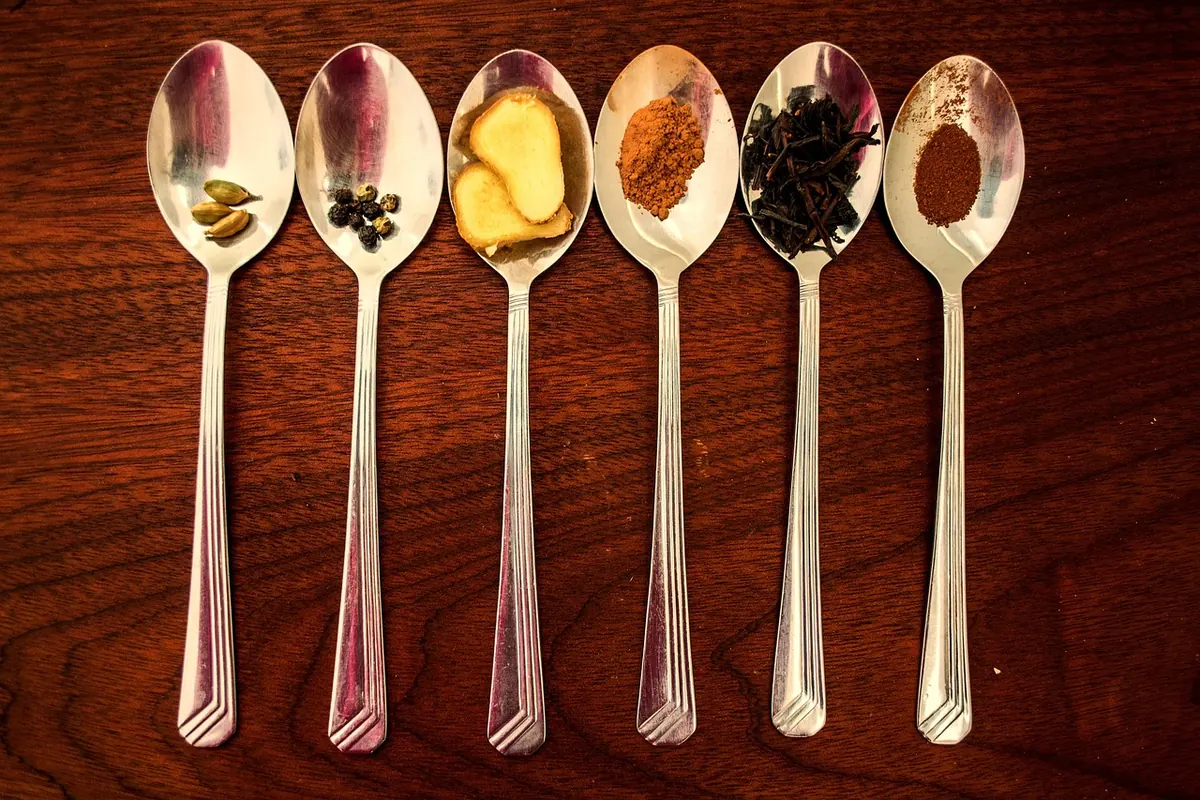
- Spices — a thumb of fresh ginger and two or three crushed green cardamom pods is plenty for a first pot.
On the ratio: equal parts water and milk gives a thick, sweet, roadside-style cup. More water makes it lighter and lets the tea speak. Neither is correct. Try both in the same week and you'll know which side you're on.
The Basic Method
- Put the water and your crushed spices in the pan. Bring to a boil, then simmer for two to three minutes. This gives the spices a head start before the tea and milk crowd in.
- Add the tea. Boil gently for one to two minutes, until the water is dark, almost black.
- Add the milk and sugar. Bring it back to a boil, then lower the heat so it simmers without climbing the sides. Let it go three to five minutes.
- Watch for the rise. The chai is close when it foams up toward the rim. Pull the pan off the heat, let it fall, put it back. Two or three of these lifts give the cup its texture.
- Strain into cups and serve right away. Chai does not improve by waiting.
Read the Pot, Not the Clock
Timings are training wheels. Color tells you more. The liquid should move from pale tan to a deep caramel, and the surface should look slightly thickened. Smell it: the spice should arrive before the milk, not after. If the pot smells flat or sour, the tea has cooked past its point.
Chai is less a recipe than a rhythm: boil, watch, taste, adjust, repeat.
Building Your Masala
Start with two spices and add a third only when you like what you have. Ginger and cardamom are the backbone. Use a thumb of fresh ginger, peeled and crushed — dried ginger powder works but tastes earthier and less bright. Crack two or three green cardamom pods with the flat of a knife so the seeds are exposed.
Once that cup tastes right, layer in these one at a time:
- Clove — one per cup. It takes over fast.
- Cinnamon — a half-inch of bark. Cassia is stronger than true cinnamon, so use less.
- Black pepper — two or three corns, crushed, for heat at the back of the throat.
- Fennel — a pinch, for a sweeter, cooler finish.
- Star anise or nutmeg — tiny amounts, and rarely both.
Crush or grind spices just before they go in the pot. Whole spices keep for months in a sealed jar; a pre-ground chai blend loses its edge within weeks. If you want a house mix, combine ground ginger, cardamom, cinnamon, clove, and pepper in a small jar and use about half a teaspoon per cup.
Milk, Sweetness, and Adjusting
Whole milk behaves best. It has enough fat and protein to take a boil without splitting, and it produces the body people mean when they say creamy. Skim milk works but tastes thin. Plant milks vary: oat and soy hold up reasonably well, almond tends to stay watery and can separate when boiled, so add it later and keep the heat lower.
Add sweetener along with the milk so it dissolves into the whole pot. Sugar is the standard. Jaggery, an unrefined cane sugar, brings a molasses edge that suits ginger well. If you use honey, stir it in off the heat — boiling flattens its aroma. Honey should not be given to infants under one year old.
Then taste, and correct:
- Too strong or bitter — add milk, or boil the tea for less time next round.
- Too milky — simmer longer to reduce, or start with more water.
- Too spicy — cut the clove and pepper before you cut the ginger.
- Weak — more tea, or fresher tea. Old leaf tastes dusty no matter how long it boils.
Chai contains caffeine from the black tea. If caffeine or sugar is something you're managing for health reasons, it's worth checking with a doctor or dietitian about what fits your situation.
When It Goes Wrong
- Dry, puckering finish — the tea boiled too long. Spices tolerate heat; leaves don't.
- A raw, harsh spice note — the spices went in late, or there are too many. Give them the first few minutes alone.
- Scorched milk or a film on the pan — heat too high or pan too thin. Lower the flame and stir more.
- Skin on the surface — that's milk fat, and it's normal. Stir before pouring.
Make It a Habit
Write down what you did the first few times: the tea, the spoon count, the water-to-milk ratio, the spices, the simmer time. Chai is hard to repeat by memory and easy to repeat from three lines in a notebook. Tweak one thing per pot. After a week or two you'll be making it without measuring at all.
Two small practical habits help more than any recipe. Rinse the pan as soon as you've poured, because milk sets quickly and scrubbing dried chai is miserable. And keep your whole spices in a small jar beside the stove, where you'll actually reach for them. Then make a cup for someone else and watch their face at the first sip. That's your real feedback, and it's better than any timing chart.
Photo: DanielaElenaTentis / Pixabay