Herbal Tea Garden: Easy Windowsill Herbs for Fresh Infusions
A supermarket bunch of mint lasts about four days. A windowsill pot of it lasts for years if you treat it well. That is the quiet argument for growing your own tea herbs indoors: you snip two sprigs, drop them in a mug, and the kitchen smells like summer in the middle of January. It costs very little to begin, and most of these plants ask for less attention than the houseplants already sitting on your shelf.
What follows is a working plan rather than a fantasy. Which herbs are worth the space, what they need from a window, how the seasons change the job, and how to brew the leaves so the cup tastes the way you imagined it would.
Pick Herbs That Earn Their Windowsill Space
Not every herb makes a good infusion. Basil, for instance, is lovely and almost useless in hot water. Start with the reliable ones:
- Mint. Spearmint or Moroccan mint is the workhorse. It grows fast, forgives neglect, and roots from a cutting in a glass of water on the same sill. Give it its own pot; it spreads aggressively and will crowd out anything sharing its soil.
- Lemon balm. Softer and more citrusy than mint, and easy from seed. It is a member of the mint family, so expect enthusiasm. Pinch it often or it will flop over sideways.
- Chamomile. German chamomile is an annual grown for its flowers, not its leaves. It wants the sunniest spot you have and a pot deep enough for its taproot. Expect a modest harvest from a windowsill, which is still enough for a few evening cups.
- Lemon verbena. One leaf flavours a whole pot of tea. It is woody rather than soft, prefers warmth, and sulks in a cold draught by a north-facing window.
- Thyme or sage. Savoury infusions that pair well with honey, and useful in the kitchen besides. Both are smaller plants, so they fit where mint would not.
Two or three pots is a realistic starting point. Six is a windowsill you will stop watering by February.
Light, Pots and Soil: What Actually Matters
Light is the limiting factor indoors, more than water or feeding. Most tea herbs want five to six hours of direct sun. A south- or southwest-facing window does this for much of the year; east and west windows work for mint and lemon balm, which tolerate a little shade. If your only option is a dim corner, a small clip-on grow light run for twelve hours a day will do more for your plants than any fertiliser.
Use pots with drainage holes and a saucer beneath — 15 to 20 cm across is enough for one herb. Terracotta dries out faster, which suits thyme and sage; glazed or plastic holds moisture longer, which suits mint and lemon balm. Fill with a light potting mix rather than soil dug from the garden. Garden soil compacts in a pot and often carries insects and weed seeds indoors with it.
Water by feel. Push a finger into the top couple of centimetres; if it is dry, water until it runs into the saucer, then empty the saucer. Mint and lemon balm drink heavily and may need water every other day in summer. Thyme and sage would rather dry out slightly between waterings. Turn each pot a quarter turn once a week so the plant grows evenly instead of leaning into the glass.
A Season-by-Season Plan
- Late winter. Sow chamomile and lemon balm seed in small pots on the brightest sill you have. Buy mint as a young plant instead — seed-grown mint is uneven, and the good culinary varieties rarely come true from seed.
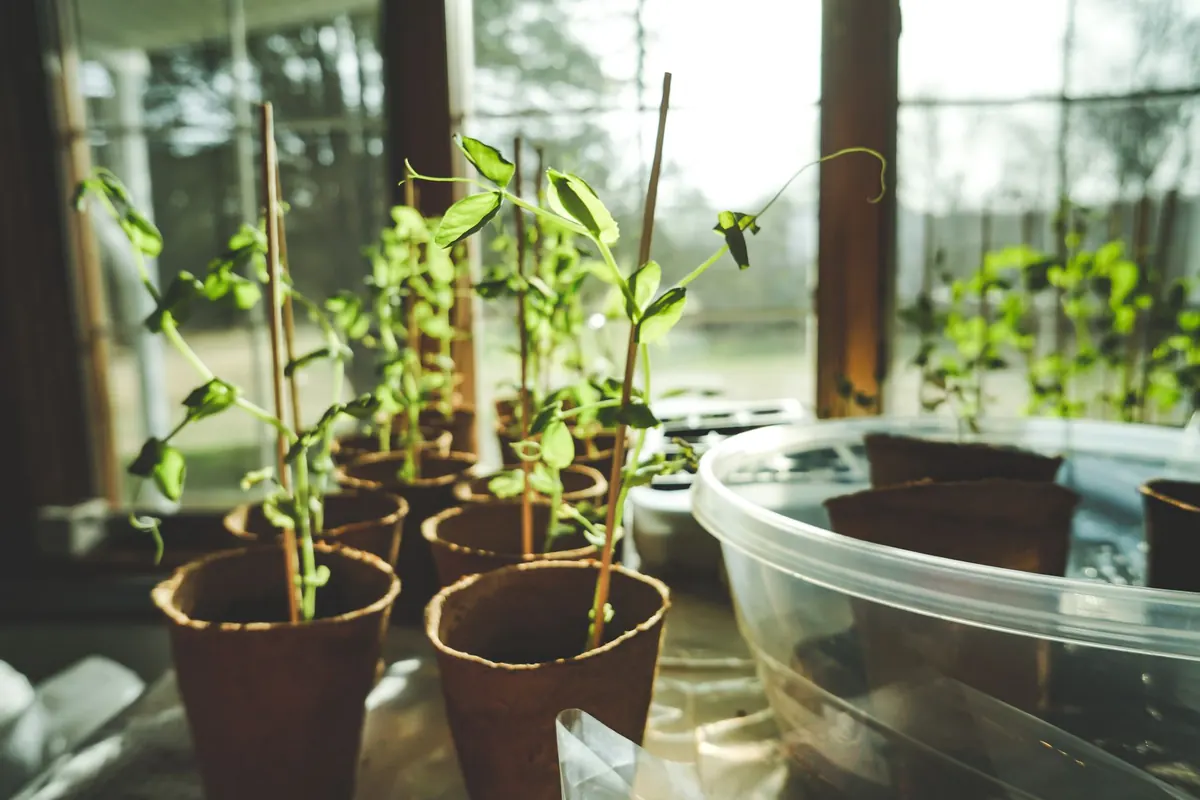
- Early spring. Move seedlings into their final pots once they have a few sets of true leaves. Pinch out the growing tips to encourage branching rather than one tall stem.
- Summer. This is harvest season. Growth is fast, water disappears quickly, and chamomile begins flowering. Cut mint and lemon balm weekly, even if you are not brewing, to keep the plants compact.
- Autumn. If you kept pots outside over summer, bring them in before the first frost. Check the undersides of leaves for pests and rinse the pots well, then let the plants adjust to indoor light over a week rather than moving them straight into a hot, dry room.
- Winter. Light is scarce and growth slows, so water less and skip the fertiliser until February. Harvest lightly. This is the season for using what you dried or froze in summer.
Harvest Often and Harvest Correctly
Snip stems just above a pair of leaves, which signals the plant to branch. Never take more than a third of the foliage at once. Morning, after the dew has dried but before the sun gets strong, is when the oils are most concentrated.
One generous sprig of mint or a small handful of lemon balm leaves is about right for a mug. Rinse them, tear or lightly crush the leaves to release the oils, and drop them in. For chamomile, pick the flowers when the petals are fully open and the centres are still yellow, not brown.
One thing worth knowing: let mint and lemon balm flower only if you want the blossoms. Once they set seed, leaf production drops and the flavour turns harsher. Pinch the buds off and keep harvesting.
Brewing So the Cup Tastes Right
Delicate leaves do not want boiling water. Let the kettle sit for a minute or two after it switches off, then pour. Cover the mug while it steeps — a saucer works — because the compounds you are after are volatile and will otherwise drift off with the steam. Five to eight minutes is a good range for mint and lemon balm; chamomile flowers are usually ready in about five. Leaving herbs in the water for half an hour will not make a stronger, better cup, just a more bitter and astringent one.
Honey suits these infusions better than sugar. In summer, pack a jar with fresh mint and cold water and leave it in the fridge overnight for a cold brew that never turns bitter.
A sensible note: herbal infusions are generally gentle, but if you are pregnant, nursing, or taking regular medication, check with a pharmacist or doctor before drinking large amounts of any single herb, chamomile and sage in particular.
When Something Goes Wrong
- Pale, leggy growth. Not enough light. Move the pot closer to the glass or add a lamp.
- Yellow lower leaves and damp soil. Overwatering. Let the top layer dry out and check that the drainage holes are not blocked.
- Tiny black flies around the pot. Fungus gnats, which breed in wet soil. Let the surface dry between waterings and water from the saucer for a few weeks.
- Crisp brown leaf edges. Dry air, often from a radiator or heat vent directly below the sill.
- A white powdery coating. Poor air circulation. Remove affected leaves and thin the plant so air moves through it.
- A mint plant that collapses overnight. Usually rootbound or bone dry. Repot into something larger and water thoroughly.
Keep the Garden Small and the Habit Regular
The windowsill tea garden works best when it stays modest. One mint plant and one lemon balm will keep a daily drinker supplied for most of the year, with chamomile added in spring for something softer in the evening. Snip a little every few days rather than staging one big harvest, and the plants stay bushy and productive instead of stretching and sulking.
Start with a single pot this week. A supermarket mint plant, repotted into something with drainage and set in the brightest window you own, is a perfectly good beginning. By the time you are tired of that one, you will know exactly which herb to add next.
Photo: . ▃ / Pexels