
Electric Kettle vs Stovetop Whistle: Which One Fits Your Kitchen?
A whistling kettle on the back burner is one of those sounds that makes a kitchen feel lived in. An electric kettle is the appliance you start and forget until the click. Both boil water, and neither is automatically the better choice. The one that fits is the one that matches how often you boil, how precisely you brew, and how much burner or counter space you are willing to give up.
Speed: Where Electric Kettles Usually Pull Ahead
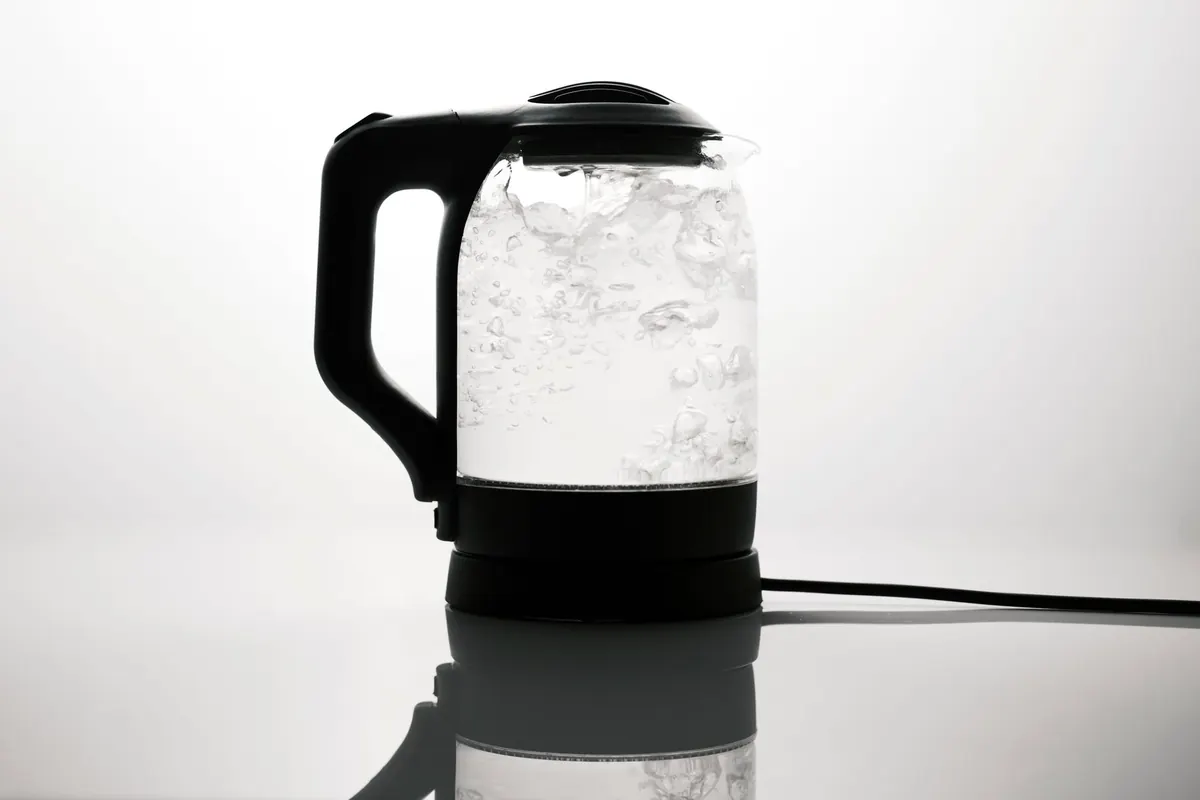
An electric kettle puts the heating element directly in the water, so very little heat escapes. A typical 1500–3000W model brings a litre to a rolling boil in roughly three to five minutes. A stovetop kettle heats through the base, and a good deal of the flame's heat drifts up the sides of the pot instead of into the water. Expect five to eight minutes on gas, longer on an old electric coil, and faster on induction if the kettle has a magnetic base.
Several small things change that math more than the appliance itself:
- Volume: boiling 500 ml instead of 1.5 litres can cut the time by more than half.
- The lid: a lid left open adds minutes you never get back.
- Starting temperature: cold winter tap water takes noticeably longer than room-temperature water. Avoid using hot tap water for tea; it can carry minerals and sediment from your plumbing.
- Wattage and material: a 3000W kettle beats a 1500W one, and thin steel or enamel heats faster than heavy cast iron.
If you boil four or five times a day, an electric kettle hands back a few minutes daily. If you boil once, speed is not a strong reason to choose either one.
Temperature Control: The Real Dividing Line
Variable-temperature electric kettles let you set anything from about 60°C to 100°C and often hold it for half an hour. That matters more than most people expect. Green teas generally want 70–80°C, delicate whites 75–85°C, oolong 85–90°C, and black tea or pu-erh close to boiling. If you brew pour-over coffee, 90–96°C is the usual target.
With a stovetop kettle, you learn to read the pot instead of a display. A whistle only starts at a full rolling boil, which is already too hot for a green tea. You can pull the kettle off before the whistle, then wait two or three minutes, or keep a thermometer in the kitchen. Some stovetop kettles have a thermometer built into the lid, which is a nice middle ground.
If your default is black tea with milk, or you mostly need near-boiling water for a French press, a basic kettle does the job. If your tea shelf has greens and oolongs on it, temperature control is the feature you will notice every single morning.
One habit worth stealing
Preheat the teapot or mug with a splash of hot water and swirl it before you brew. A cold vessel can drop your water temperature by several degrees before the leaves ever get wet.
Capacity, Footprint, and Handling
Electric kettles usually run from 0.5 to 1.7 litres; stovetop kettles from 1 to 3 litres. Do the arithmetic before you buy. A standard mug holds about 250 ml, a small teapot 600–700 ml, and four mugs for guests is roughly a litre. Boiling far more than you pour just wastes time and energy.
Weight matters too. A full 1.7-litre electric kettle weighs a little over two kilos, and a full 2-litre stovetop kettle is heavier still. If your wrists complain, buy smaller and refill.
The stovetop kettle also claims a burner, which is a real cost in a small kitchen where something is always simmering. The electric kettle claims an outlet and a patch of counter, and cords are often short by design, so check the distance to your nearest socket.
Noise: Whistles, Hum, and Clicks
The whistle is the loudest thing in this comparison, and it is meant to be. It works as a summons from another room and as a timer while you are doing three other things. It is less charming during a work call in an open kitchen. Many whistles flip down to silence, and some kettles have a two-tone whistle that carries even further.
An electric kettle gives you a low hum while heating, a bubbling crescendo, then a click. Cheaper models can rattle or buzz, and a hard boil in a glass kettle is surprisingly audible. Neither option is silent, and a gas burner adds its own quiet roar. If you are sensitive to sound, listen to a kettle in person before buying.
Maintenance, Materials, and the Long Haul
Scale is the enemy of both designs. In a hard-water area you may see a white crust on the element or the base within weeks. If you hear a rough rumble or notice a chalky film, it is time to descale.
- Fill to about two-thirds with one part white vinegar to two parts water, or use a citric acid solution according to the packet.
- Bring it to a boil, then let it stand for fifteen to thirty minutes.
- Pour out, scrub gently with a soft brush or non-scratch pad, and rinse thoroughly.
- Boil a fresh batch and discard it before making tea again.
Electric kettles need a few extra rules: never immerse the base or the cord connection, keep the exterior dry, do not fill past the maximum line, and never let it boil dry. Most switch off automatically, but the element and seals still take damage.
Stovetop kettles ask for different care. Keep the flame inside the base — a flame licking up the side scorches enamel and handles. Do not plunge a hot enamel or glass kettle into cold water. Dry the outside after washing to prevent rust spots on carbon steel, and check the handle screws now and then.
On materials, an exposed stainless steel or glass interior is the easiest to keep clean and the least likely to affect the taste of your water. If the inside of an electric kettle is plastic, think about whether you want hot water touching it several times a day.
Which One Fits Your Kitchen?
Choose electric if you boil water several times a day, you drink green, white, or oolong tea, you want auto shutoff, or you have no free burner to spare.
Choose stovetop if you enjoy the ritual, you want hot water when the power is out and you cook on gas, you need a large kettle for a crowd, you want a gooseneck for pour-over, or you simply prefer one fewer cord on the counter.
Plenty of tea drinkers keep both: a small variable-temperature electric kettle for the morning green tea and a stovetop kettle for volume, guests, and outage days. That is not indecision; it is good tooling.
A Simple Way to Decide
Track one week. Count how many times you boil and what you brew with that water. Buy for the ordinary day, not for the once-a-month occasion when eight people come over. Then pick a kettle you can clean easily — wide opening, a lid that comes off, no hidden crevices near the spout. If your water is very hard, a simple filter jug will cut down how often you descale, and your local water report will tell you what you are working with. A kettle you enjoy handling gets used well, and used well, a good one lasts a decade or more.
Photo: Engin Akyurt / Pexels